Blog Feed

The Best Cable Organizers for Your Office Space

One of the most annoying issues of day to day cubicle life is the problem of tangled cables that seem to take over the entire space. The cables that you use for powering your electronic devices and to charge them seem to spread uncontrollably and they also tend to create incredible bundles with other cables.

conference room audio video

The cable situation in your cubicle might look hopeless, but it is not – there are many great cable organizing solutions that can help you keep your conference room audio video cables straight and separated. Here are the best organizer types:

  • Sleeving solutions – whether made from plastic, form special braided material or from plastic spirals, cable sleeves are among the most attractive and most efficient cable management solutions. Cable sleeves are also durable solutions that come in various colors to fit into your cubicles;
  • Raceways – these enclosures can be installed in the floor, on the wall, even in corners and they form a covered pathway for your cables, organizing and protecting them at the same time;
  • Velcro bands – Velcro is a simple, ingenious and versatile material that can be used for organizing your cables, too. Just disentangle your cables, decide on the direction they should run and the path they should take and bind them together with suitable pieces of Velcro.

Article Source over here: The Best Cable Organizers for Your Office Space
Understanding Cable Connectors

custom cable manufacturers

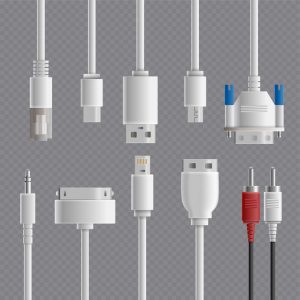
A cable connector is the part of the cable that plugs into an electrical or electronic device to connect the device with another device or to plug the cable (and with it, the device at the other end) to the power supply. The two principle cable connector configurations are called male and female – male connectors have one or several exposed pins, while female connectors have holes into which the pins of the male connector are inserted.
Cable connectors can also be categorized based on the type of device the connect:
– Audio connectors – they usually consist of a hole with a color-coded circle around to make it easier to find the matching cable (fitted with a circle of the same color at the end);
– Centronics – these long connectors have lots of thin pins and are the most connectors for old-type TV sets, printers, scanners and fax machines;
– D-sub connectors – these connectors usually feature 11 thick pins in the middle of a larger surface and they are used for connecting keyboards and monitors;
– Modular connectors – these units consist of a single hole and they serve the purpose of transferring data through data systems and telephone networks. These are the connectors that you will use for connecting your computer to the internet modem.

For additional information regarding cable connections and manufacturing, look at a custom cable manufacturers website for more details.

First Posted on: Understanding Cable Connectors

How to Figure Out Which Cables You Need for Your Old Electronics

audio visual vga to hdmi cable

Old cables and chargers tend to accumulate, bundle and spread uncontrollably – for some reason, old cables tend to linger around for a long time after the device they belonged to is gone, that’s why we all have cables that cannot be plugged into any of our existing devices. However, there is another scenario that is just as annoying: you have an old piece of electronics that has not been turned on in a very long time, but you need it to extract some important information stored in its memory and you don’t know which of your cables fits into the plug of the device.

When it comes to solving the latter issue, the bad news is that you will have to check each of your old cables to see whether it fits into the old plug, but there is good news, too: the search for the right cable will be an excellent opportunity for you to organize your old cables. You may find that you need a vga to hdmi converter cable. And you will surely have some cables that no longer fit anywhere and that you should take to a cable recycler (who will pay for it) and you will also have some that still have matching devices and can be useful.

Article Source over here: How to Figure Out Which Cables You Need for Your Old Electronics

What Are Adaptors and How to Use Them

Adapters are devices that take attributes from one system and transform them to become usable by a different system that is in itself incompatible with the system that provides the attributes. The most common examples of adapters include units that convert AC current to DC current, the adapters that make special plug configurations, such as the plugs intended for being used in the US, compatible with systems that use different configurations, such as the power outlets used in Europe and USB adapters that convert USB data signals to and from other communication protocols.

cable adapters

Adapters are usually small devices that are easy to use. They usually feature intuitive configurations, meaning that the connectors they are equipped with can be used only one way. Adapters being used for connecting to otherwise incompatible systems, they usually feature one connector for each of the two systems. The two connectors on the adapter usually look very different, what’s more, they are usually distinguished with rings of the color that you will find on the plug belonging to its respective system, so you cannot make a mistake when plugging the connectors. The adapter will start working when both systems are powered, up and running, the transformation process taking place either automatically or after turning on the adapter.

You can find out more about adapters and cable/plug connectivity at https://iec.net/.


First Posted over here: What Are Adaptors and How to Use Them

Can Old Cables Be Recycled?

 recycling cables

Cables, such as the popular 4k hdmi cable, are composed of a metal core, usually made from copper or aluminium, surrounded by a plastic insulation. Both materials being recyclable, old cables can be efficiently recycled – here is how the process goes:

  • Old cables are collected by recycling companies that pay a predefined price for the cables. The price is composed of the price of the plastic material and the price of the metal. The alloys used in cables are usually fully recyclable, so the price paid for the metal component is around the market price for the specific alloy;
  • After being collected, old cables are transported to a plant that uses dedicated technology to separate the plastic from the metal. The process involves the granulation of the cables, followed by the extraction of the metal component. After separation, the two components are reused in other plants – the smelted metal is used for manufacturing new metal components or made into new cable cores and the plastic is also reused for a variety of purposes.

The recycling process is very similar for other electrical items and accessories, such as chargers and other small electronics, the benefits of the process being the same in all cases: reduced production costs for the manufacturing of new cables and devices and reduced environmental impact.

First Posted over here: Can Old Cables Be Recycled?

Tips for Keeping Your Cables and Cords Organized

Cables and cords have a way to take over your entire room, forming bundles and obstacles on the floor and congregating in the corner. Fortunately, there are lots of great ways to organize them and to keep them organized – here is how:

  • Take the time to disentangle and to sort them – the task is tedious, especially when you have a long 50 ft hdmi cable, but necessary. Separate all the cables in the bundle, identify the device that they are for and eliminate any cable that you don’t need;
  • Pick an organizing solution – there are lots of great cable organizing solutions available. The most common are raceways and sleeves, but until you find the perfect organizing method, you can use humble, ingenious Velcro as a temporary organizing device;
  • Get a table station for your desk – cables and cords tend to take over not only your floor, but your desk as well. To keep the cords neatly organized on your desk, get a cable station with the suitable number of holes to introduce the cables that you need for your desk appliances;
  • Get a tech pouch for any cords, cables and chargers that are not permanently in use – these pouches come with pockets to accommodate different cords and chargers, keeping them clean, unentangled and organized.

50 ft hdmi cable

First Seen on: Tips for Keeping Your Cables and Cords Organized

How are Fiber Optic Cables Different from Other Cables?

A fiber optic cable is made up of incredibly thin glass or plastic wires, known as optical fibers; a single cable can have from two wires up to several hundred. Each wire is ten times thinner as a human hair and can “carry” for example 25,000 phone calls, so a fiber optic cable can easily support millions of calls.

fiber optic cable

A fiber optic cable carries information between two locations, using fully optical (light-based) technology.

Different uses of fiber optic cables

Computer networks, as well as radio and television broadcasts

Fiber optic cables are now the main way to carry information over long distances, as they have three great advantages as opposed to old copper cables:

  • Less signal loss and less need for amplification
  • No electromagnetic interference between optical fibers, so they transmit information more reliably and with better signal quality
  • Larger bandwidth

Medicine

Medical gadgets that help doctors investigate the inside of our body, without invasive operations requiring large incisions, were the first application of fiber optics in medicine.

Military communications

A fiber optic cable is inexpensive, thin, lightweight, high-capacity, robust against attack, and extremely secure, so they provide perfect ways to connect military bases and other facilities, such as rocket launch sites and radar stations.

First Seen on: How are Fiber Optic Cables Different from Other Cables?

Accessories Needed to Show Video in a Conference Room

video vga cable solutions

A conference room is the place where various events and meetings are organized and can be attended directly or indirectly (remotely). To ensure the successful development of these events, the conference room should be equipped with professional audio-video systems.

The first thing everyone observes when entering a conference room is the display. This is the main visual element of the room and represents one of the most important collaboration tools. What would be a business meeting or presentation without dynamic images, movies and presentations? Boring and unproductive, that`s for sure. The video projector is a powerful multimedia tool that once connected to a source (PC, DVD player) allows the projection of images and movies on the display.

Controlling the video projector and the conference system is ensured through the available interfaces, while the presentation display and PC/ DVD player – via interfaces implemented through the dedicated ports. The lighting system and the projection screen are controlled via channels with relay function.

Modern technology allows fast switching between display solutions as well as between A/ V signal sources, being facilitated by an HDMI or vga cable solution with built-in automatic resolution adjustment function. Thus, the equipment automatically converts the resolution of the input video signal in real time to the resolution required by the display equipment.

First Posted on: Accessories Needed to Show Video in a Conference Room

How Far Can I Run My Cable?

custom cable manufacturersBelieve it or not this is a pretty popular question. With all the different types of interfaces (Serial, Parallel, 10Base-T, 100Base-T, USB, IEEE-1394 FireWire, IEEE-1284 Parallel and Antenna for Wireless networks) it gets pretty crazy so lets see if we can make it a little easier on you.

Serial: To determine the maximum length, some will say that the total capacitance cannot exceed 2500 pF. Every cable has a “capacitance per foot” rating (Scroll down to see the Cable Capacitance Guide that shows the capacitance per foot on our common wires). In order to determine the total capacitance, just take the capacitance per foot and multiply it by the length in feet. Or to determine the maximum length on a cable, take 2500 and divide it by the capacitance per foot. For example, if you have a wire that’s 15 pF/Ft, and made a 150 foot cable with it. The total capacitance is 15 pF/Ft times 150 feet or 2250 pF, still within the limit. On the other hand, you want to determine the maximum length of this 15 pF/Ft wire, take 2500 and divide it by 15 to get 167 feet as the maximum length.

Examples
15 pF/Ft x 150 feet = 2250 pF
2500 pF (max.) ÷ 15 pF/Ft = 167 feet (max.)

To see our list of serial products and custom cables click one of the following categories:

RS232 Cables V.35 Cables RS232 Extenders
RS232 Converters  RS485 Converters  Cards and PCMCIA Adapters
Serial Auto Switches


10Base-T or 100Base-T: The total length of wire segments between a PC and a hub or between two PC’s cannot exceed 100 Meters (328 feet or about the length of a football field). To see a list of our networking products, click one of the following categories: 10Base-T and 100Base-T, NIC, Repeaters, Hubs, Switches, Print servers, Transceivers, or Converters.
IEEE-1284 Parallel: With the older style “Centronics” parallel, the length limit is typically 9 to 12 feet although some 30 foot connections have worked. The IEEE-1284 can go up to 50 feet in length. To see a list of our parallel products, click one of the following categories: Parallel, IEEE-1284, Converters, Extenders, IEEE-1284 Auto switch boxes, Parallel Auto switch boxes.
USB: In practice, the USB specification limits the length of a cable between full speed devices to 5 meters (a little under 16 feet 5 inches). For a low speed device the limit is 3 meters (9 feet 10 inches). most manufacturers do not recommend and will not support cables longer than 10 feet, although there are active extensions available that will allow longer runs ADP31802-xx, or extenders that will allow you to have a USB Run 150′ over Cat 5 cable, ADP3185. To see our manual switches for USB Click Here
IEEE-1394 FireWire: FireWire cables use 28 AWG wire and are limited to 4.5 meters maximum cable length. To see a list of our FireWire products, click one of the following categories: FireWire, PCMCIA card and Hubs

Cable Capacitance Guide

Standard or Generic Multiconductor
Part Number Cap. Per Foot Cond. Size
CAB004 33 pF 24 AWG (7×32)
CAB006 33 pF 24 AWG (7×32)
CAB009 33 pF 24 AWG (7×32)
CAB010 33 pF 24 AWG (7×32)
CAB012 33 pF 24 AWG (7×32)
CAB015 33 pF 24 AWG (7×32)
CAB020 33 pF 24 AWG (7×32)
CAB025 33 pF 24 AWG (7×32)
Low Capacitance Cable
CAB004-LC 15.5 pF 24 AWG (7×32)
CAB006-LC 15.5 pF 24 AWG (7×32)
CAB008-LC 15.5 pF 24 AWG (7×32)
CAB012-LC 15.5 pF 24 AWG (7×32)
CAB018-LC 15.5 pF 24 AWG (7×32)
CAB025-LC 15.5 pF 24 AWG (7×32)
UTP Solid Wire
Category 5 15 pF 24 AWG (solid)
Category 6 15 pF 24 AWG (solid)


Antenna cables: Specifically antennas for wireless networks, the length limit depends on the size of coax;

Coax Type Length Limit
RG174 (.11″ OD) 10 feet
RG58 (.21″ OD) 50 feet
LMR400 (.41″ OD) 100 feet
LMR600 (.60″ OD) *150 feet

*If the transmitter has a stronger signal, the length can go further on LMR600.

First Seen right here: How Far Can I Run My Cable?

Cables Needed for Conference Room Audio

Organizing different types of meetings for business, marketing or educational purposes suppose the efficient, interactive and easy communication with a group of different participants (sometimes they may be of diverse nationalities), in specially arranged rooms.

This is why a conference or meeting room must be equipped with multimedia equipment to make meetings efficient. The audio system is part of the conference room audio video standard equipment and makes it possible to communicate at a comfortable sound level, covering uniformly the entire room so that the audition is excellent for all participants.

conference room audio video

The correct configuration of the audio system involves acoustic measurements and the use of adequate audio speakers and accessories. For all of this you need professional cables and connectors, with an exceptional quality of audio signals.

The types of audio cables and audio-video connectors required for conference rooms include:

  • SCART Audio / Video bulk cable with OFC conductors
  • Balanced bulk audio cable, 2 PFC type insulated conductors
  • Bulk audio cable for acoustic enclosures, 2 OFC insulated conductors
  • Super flat bulk audio cable for acoustic enclosures, 2 OFC insulated conductors
  • Bulk audio cable for public address
  • Microphone cable
  • Professional RCA Male and Female connectors
  • Professional XLR Male and Female connectors
  • Professional XLR Male and Female mini connector
  • Professional 6.3 mm jack mono & stereo jack
  • Professional HDMI connector for AV integrators
  • Professional 3.5 mm stereo jack connector


Originally Posted over here: Cables Needed for Conference Room Audio

Design a site like this with WordPress.com
Get started