Blog Feed

Where is a Reputable Place to Purchase Cables?

IEC cable distribution

In the multimedia universe, there is a lot of discussion about the importance of power cables. On the pages of cable manufacturers you can find different explanations about their influence when used for different devices and systems. Some argue by using the electrical characteristics of the materials, others point out how the electrical power reaches the devices.

Non-certified cables

Many owners of gadgets and electric appliances want to save money and purchase non-original cables, mainly made in China. But these cables can create problems. First of all, you never know if such a cable will actually work. And neither how long will it work, considering that it can get damaged quite easily. Second, the use of non-certified cables can cause significant damage to the gadget, due to inadequate output voltage and other technical issues.

For example, in the case of an iPhone, using fake and non-certified cables, you can expect the following:

  • your iOS device can be damaged
  • the cable will stop working pretty soon
  • the charging connectors may break, heat or simply not fit the device
  • your device may not sync or charge

For this reason, only cables purchased exclusively from certified and trusted vendors – see here https://iec.net/ – should be used. A good alternative is to buy them directly from the manufacturer.

First Seen over here: Where is a Reputable Place to Purchase Cables?
How Long can HDMI Cable be Before Losing Picture Quality?

Everyone who has a high definition TV or home cinema system is familiar with a HDMI cable.

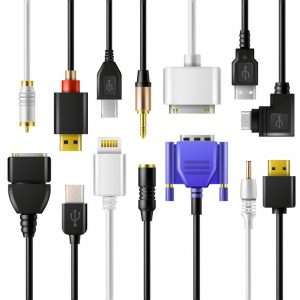
This cable can be used with audio and video equipment such as Blu-Ray DVDs or HDTVs. Although it looks quite similar with a USB cable, HDMI cable has 19 wires inside. If you wonder what is different about this cable, the answer is that it is designed to transmit content with a bandwidth of 10.2 Gbps. Its capacity is remarkable especially considering that it represents twice as much as it is necessary to transmit multiple audio-video channels. You can find out more about cable design and uses through IEC.

This HDMI innovation is far beyond what its predecessors used to be. But this is not the only reason why HDMI is superior to everything we knew so far. HDMI represents a digital source, uncompressed, while the other types of cable are analog. This type of cable makes no conversion, as it retains the original digital signal. The result is a clear, clean image and sound at the highest quality, as long as the cable is original and installed professionally. A well constructed HDMI cable does not have active components, which means that it can be used for a very long time and it will not fail outright if it is left untouched.

IEC


First Seen over here: How Long can HDMI Cable be Before Losing Picture Quality?

Types of TV Wall Mounts

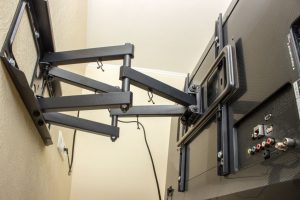
TV wall brackets

Flat screen TV sets are designed to blend into their environments, therefore they provide a much better viewing experience when they are mounted on the wall than standing on a table or on a stand. To be able to place your new flat screen on the wall opposite your super-comfy couch, you will need brackets – here are the wall mount types that you can choose from:

  • Fixed brackets – these brackets are affordable, sturdy and durable and they are the easiest to install of them all. Fixed brackets are, as the name suggests, fixed, that is, they don’t allow for any adjustments after they are installed and the screen cannot be adjusted in any direction afterwards;
  • Tilting TV wall brackets – these brackets are also easy to install and they allow for mild, 5-15 degrees adjustments, offering a better viewing experience, especially for short viewers, such as kids;
  • Full-motion brackets – this type of wall mounts allows for the best viewing experience. A full-motion bracket consists of a base that is fastened to the wall and a strong, stable swivelling arm that extends and that practically holds the screen. The installation of these brackets is a bit more complicated than the installation of the other two types and the costs are slightly higher, too, but beside the better view and the superior adjustability, they also offer easier access to the cables.

Original Post on: Types of TV Wall Mounts

What Is the Difference Between an OEM and an ODM?

If your company is planning to sell electronic equipment or motor vehicle components, you have surely encountered the terms OEM and ODM. The abbreviation OEM stands for Original Equipment Manufacturer, while ODM stands for Original Design Manufacturer – here are some features that distinguish the two types of manufacturers.

OEM cable

OE manufacturers are companies that produce equipment or equipment and OEM cable components that are sold to retailers and marketed under the brand name used by the purchasing company – when the term is used for the manufacturers of car parts, it refers to the companies that provide replacement parts for the parts used for making the car in the factory. What OE manufacturers do is basically to take the client’s product design and will manufacture the product based on those specifications.

OD manufacturers are companies that design and manufacture products that are branded by another company that will actually sell the product. The brand companies – the firms that will sell the product under its name – can turn to ODM companies for their products and benefit by not having to run their own factories. OD manufacturers collaborate with their client from the design phase through the manufacturing, allowing their client to put their name on the product label.

Original Post right here: What Is the Difference Between an OEM and an ODM?

Advantages of Fiber Optic over Copper Wiring

When setting up your new network you have two basic choices: fiber or copper. Both offer superior data transmission. The decision on which one to use may be difficult. It will often depend on your current network, your future networking needs, and your particular application, including bandwidth, distances, environment, and cost. In some cases, copper may be a better choice; in other situations, fiber has big advantages.

Fiber optic cable is becoming one of the fastest-growing transmission mediums for new cabling installations and upgrades, including backbone, horizontal, and even desktop applications. Fiber optic cable is favored for applications that need high bandwidth, long distances, and complete immunity to electrical interference. It’s ideal for high data-rate systems such as Gigabit Ethernet, FDDI, multimedia, ATM, SONET, Fiber Channel, or any other network that requires the transfer of large, bandwidth-consuming data files, particularly over long distances. A common application for fiber optic cable is as a network backbone, where huge amounts of data are transmitted. To show the comparison here is a chart.


COPPER FIBER
BANDWIDTH MAX. IS 1 GIGABIT 10 GIGABIT AND CLIMBING
FUTURE NEEDS CAT 7 IS STILL BEING DEFINED VERY EXPANDABLE AND IS EVOLVING
DISTANCE 100 METERS @ 1000 Mbps 40 km+ @ 10,000 Mbps
NOISE Negative response to EMI/RFI and Voltage surges No Effect
SECURITY Easily tapped into Almost impossible to tap
PULL-STRENGTH 25 pounds 100-200 pounds

50 vs. 62.5 micron cable.

Although 50-micron fiber cable features a smaller core, which is the light-carrying portion of the fiber, both 62.5- and 50-micron cable feature the same glass cladding diameter of 125 microns. You can use both in the same types of networks, although 50-micron cable is recommended for premise applications: backbone, horizontal, and intrabuilding connections, and should be considered especially for any new construction and installations. And both can use either LED or laser light sources.
The big difference between 50-micron and 62.5-micron cable is in bandwidth-50-micron cable features three times the bandwidth of standard 62.5-micron cable, particularly at 850 nm. The 850-nm wavelength is becoming more important as lasers are being used more frequently as a light source.
Other differences are distance and speed. 50-micron cable provides longer link lengths and/or higher speeds in the 850-nm wavelength. See the Chart below.


Max. Length
@1310 nm
Max. Length
@850 nm
Bandwidth
62.5/125 um 500 meters 220 meters 160 Mhz/km
50/125 um 500 meters 500 meters 500 Mhz/km

Click here to enter our fiber optic products in our online catalog.

IEC strives to be the best custom cable manufacturer.

Original Post over here: Advantages of Fiber Optic over Copper Wiring

What Is a DB19 Connector?

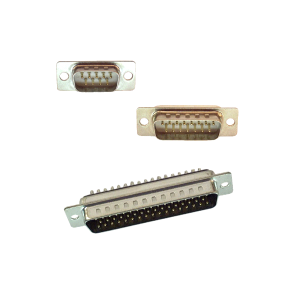
DB19 connectors are made up from 19 pins distributed in two rows, ten pins in one row and nine pins in the second one. The connector was extensively used in the past, for connecting the monitors and disk drives installed on old NeXT and Macintosh computers and for ASCI connections on old Atari units, but have become obsolete – until recently.

db19 connectors

Today, the connectors and the cables that can be attached to them are increasingly in demand by computer enthusiasts looking for ways to keep their old computers running and the old programs that run only on these vintage units enjoyable. The reason why anyone would need DB19 connectors is simple: all connectors are sensitive to impact and the older the unit, the higher the chance that one or more of the pins is broken. Individual socket pins for DB19 connectors are not normally replaced, but complete connector replacement is not very difficult.

While DB19 connectors were in shortage for about a decade, manufacturing has recently started again. The connectors are not yet available in every computer shop, but with a little research, vintage computer enthusiasts can find a supplier form which they can order their special DB19 connector and where cables are available as well.

First Posted here: What Is a DB19 Connector?

Different Types of Network Connections

custom cable manufacturers

When we hear or see the term “network connection”, most of us think of the internet. While the internet is surely the largest, most common and most widespread form of connection between computerized networks, it is not the only type of connection – most of us also use business networks and home networks day by day, often without even noticing it or without thinking too much about it. Here are some details from expert custom cable manufacturers about the most common types of network connections:

  • Various types of internet connection – the broadband connection is still one of the most common technologies used for accessing the worldwide web from a fixed location, but with mobile devices becoming universally used, mobile connections are also very much used, especially by those who need to stay connected while on the go;
  • LAN connections – Local Area Networks connect local devices to each other. The devices connected through LAN are usually located within the same building and the method uses network switches and routers to establish the connection;
  • Direct networks – this type connects two devices directly, through close range connections. The connection might be established with the help of cables, through Wi-Fi or Bluetooth and can be used for transmitting files and information in other forms between the two devices.

First Posted over here: Different Types of Network Connections

A Simple Guide to Computer Connectivity

Desktop computers and mobile devices are everywhere and we use them every day to perform tasks through their inbuilt functionalities, but in most cases, we use our digital devices to connect to other digital devices and to obtain information or to perform tasks through digital networks. Digital networks vary in type and size – most home networks can manage up to 20 devices, corporate networks allow for connecting thousands of devices, while the internet handles the requests coming in from billions of devices every second. The types of devices that can be connected include not only computers and mobile devices – peripheries, such as scanners and printers are often connected to networks as well, allowing users to perform tasks on them remotely.

computer connectivity - vga cable and more

Whatever the size and the complexity, any digital network needs digital units that are used to access the network and most likely hdmi or vga cable connection components to enable the access. In the case of a network used in your home or by a company, the connection is established through cables and switches and probably one or several central servers. Connection to the worldwide web is very similar, the difference to be accounted for being graspable in the immense number of digital devices requesting the exchange of information through the network.

First Seen here: A Simple Guide to Computer Connectivity

The Differences Between VGA and HDMI – Two Standards and What Sets Them Apart

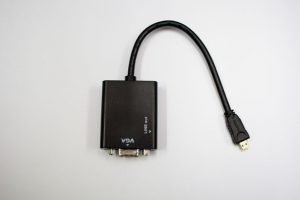
 vga to hdmi

Video technology works with several display standards, two of the most common ones being VGA and HDMI, both coming with specific parameters in terms of aspect ratio, display size and resolution, refresh rate and color depth.

Both standards are associated with specific connectors, features and image quality. VGA stands for Video Graphics Array and denotes an analog interface used for supporting high-definition video playback, at resolutions of 1080p and higher, while HDMI is a digital interface, the abbreviation standing for High-Definition Multimedia Interface, able to transmit uncompressed video data and compressed or uncompressed audio data.

VGA used to be the only interface until the early 2000’s (major manufacturers started phasing out VGA around 2010, with support for the format being discontinued in 2015), when the digital interface started to become more widespread and preferred due to its ability to transmit more information and to minimize data loss, thus maximizing quality. The two standards are associated with different cables and connectors – while modern devices use HDMI as standard, many of them still have ports suitable for connecting VGA peripheries through cables that allow for the conversion between the two standards. VGA to HDMI converter cable is available in any computer and video equipment store, providing an efficient and affordable conversion solution to link the two formats.

First Posted on: The Differences Between VGA and HDMI – Two Standards and What Sets Them Apart

Home Network Accessories – What You Will Need for the Setup

home network - 50 foot hdmi cable

The times when we needed a bunch of cables, a huge modem and a land line phone to jump on the internet are fortunately over, but we still need accessories to set up a computer network in our home. Here are the accessories that you need for creating such a home network:

  • A modem and a router or a modem router – the modem is the device that connects to the internet, while the router is the device that connects the devices in the network to Wi-Fi. Modern units combine the two functionalities, providing access to the internet through cable as well as through wireless connection;
  • Access points – these units come useful if you need to access the internet through your Wi-Fi from a device that is located too far from the router;
  • Cables – having a set of cables of different lengths is useful if you are setting up a complex network; Depending on your set up, you may need to think about installing a 50 foot hdmi cable.
  • The terminals – these are the units that you will use to access your network from. You can use desktop computers, laptops, notebooks as well as other mobile devices, such as smartphones and tablets for the purpose and you can also connect printers, scanners and smart household appliances. The number of the devices that you can connect will depend on the capacity of your network.

First Seen over here: Home Network Accessories – What You Will Need for the Setup

Design a site like this with WordPress.com
Get started